Key predictions in OOH for 2026
In 2026, Out of Home advertising will offer brands two intrinsically important advantages. The first is helping them to ‘Be Real’, the second is how it will enable them to turn ‘Data into Outcomes’
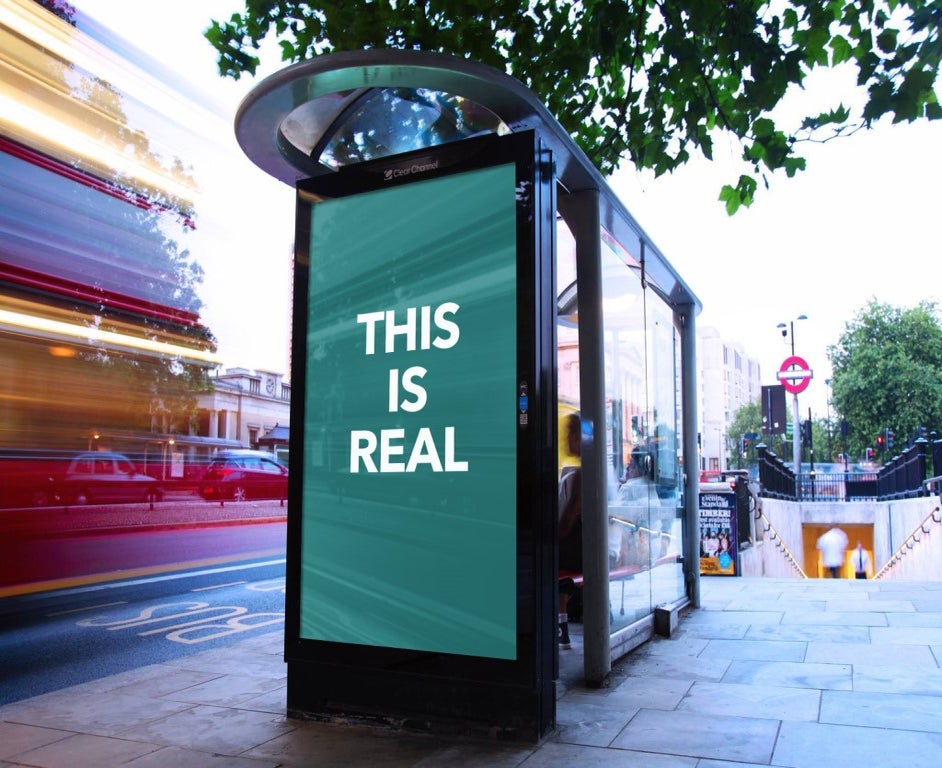
- BE REAL
OOH reaches 98% of the population, so will be well placed to help brands looking for authenticity and a real-life presence away from an increasingly divisive digital world, offering both credibility and the promise of shared and experiential engagement.
OOH is a ready-made solution to the “In Real Life Revolution”
Digital fatigue is real. Research is repeatedly showing that consumers are putting real-life experiences over digital ones. A study by Barclays revealed that people are prioritising spending on experiences rather than products, and another from Harris Poll revealed that 71% of consumers said experiencing a brand physically deepened their connection to it, with 81% of Gen Z and Millennials wishing it were easier to disconnect from digital devices.
According to Government data, time spent outdoors is now higher than pre-pandemic, and more time outdoors, means more time with OOH. Reaching 98% of the UK population in one week in a multitude of environments and contexts; OOH’s value for brands to connect with audiences in a receptive mindset continues to rise.
Trusted, familiar and tangible; OOH in 2026 adds ‘cultural currency’ building long term brand health, not just product launches. Think strategic brand partnerships and community led activations that can tap into fan culture, creating engagement that is both authentic and more meaningful.
With a growing number of contexts and locations, from bars and universities to pop-up installations OOH is the perfect partner for brands looking to build unrivalled reach and impact with authenticity.
OOH is the platform for shared cultural moments
The value of human connection will continue to grow exponentially in 2026 as we look forward to a World Cup year and many major sporting events in the UK. For those in attendance, OOH can become a partner for these shared memories and cultural moments, ensuring brands are seen as a real presence where audiences are emotionally invested and receptive.
Brands should also look to develop experiential spaces, using OOH to amplify messaging and DOOH to allow real-time updates. New social OOH products will start to make their presence felt in 2026, allowing real-time content sharing from fans, and allowing consumers enjoying events at home to make their presence felt OOH.
Brands should look to tap into these shared experiences, reflect memories and maybe a certain level of nostalgia to ensure ongoing cultural relevance.
In 2026, when authenticity comes at a premium, being truly real becomes the most powerful way for brands to stand out and be seen.
Takeaways
- Incorporate OOH into media plans to deliver balance and greater attention from those suffering from digital fatigue. Exploit its authenticity, public face and physicality to maximise impact and create meaningful friction with online gateways. Focus on contextual messaging and create campaigns that combine bold simplicity with interactive depth, leveraging technologies like AR and QR codes to further integrate OOH with digital ecosystems.
- Show up at cultural moments. Look to develop experiential spaces, using OOH to amplify messaging and DOOH to allow real-time updates. Use new social OOH products to allow real-time content sharing and enabling consumers enjoying events at home to make their presence felt OOH.
2. TURNING DATA INTO OUTCOMES
Maximising reach is still crucial but enhanced by its ability to deliver AI-driven optimization, contextual and hyperlocal targeting, OOH will enable brands to more easily find the ‘moments that matter’ and adapt their messaging in real-time for improved outcomes.
Better data , better outcomes
Data is fundamentally about effectiveness. If it’s reliable, accurate and timely, proper analysis will gain actionable insights and improve operations or ROI. Without quality data, effectiveness is a mirage.
OOH’s effectiveness in being seen, capturing attention and shaping perceptions or behaviour will continue to be enhanced by data analytics. We will see an increase in the use of sophisticated data tools to analyse audience location, creating bespoke OOH campaigns in seconds, adapting and scheduling creative using live data triggers. New econometric models will be developed through test and control studies to more accurately measure the impact of campaigns beyond just the impulse sales at the nearest store.
Data teams will be increasingly focused on OOH media planning. Integrating DOOH with programmatic platforms elevates online and digital marketing strategies across digital and physical worlds.
Programmatic DOOH created significant efficiencies with live weather or event-based targeting. But with OOH audience metrics rooted in static historical data the benefits from programmatic precision & optimisation were theoretical. And costly. Advances in live and synthetic data, and AI-driven data integration, will allow programmatic to identify current audience numbers in specific locations plus their likely demographics, interests & behaviours to dynamically serve ads when the target audience is most present in those target moments.
AI enabled data will continue to transform OOH planning with precise behavioural insights, optimising the creative processes, and improving measures of ‘real-world’ effectiveness. Enhanced data integration in omnichannel marketing will increase media efficiencies and improve ROI.
Data enables OOH to fully integrate into the retail media landscape
The retail media footprint will continue to expand. The proliferation of digital screens in retail environments will allow for real-time understanding of purchase behaviour, enabling brands to leverage context more effectively through hyperlocal messaging.
Brands will capitalise on the blurring of lines between retail screens and OOH screens to create more connected communication within the last mile. Content can be optimised across digital screens as well as geo targeted mobile ads.
Retail data in combination with contextual triggers such as the time, day, weather will combine to provide retail-based messaging optimised based on a person’s location, mood and mindset.
For brands, this means retail‑based OOH becomes not just a media channel but a real‑time optimisation engine. For consumers, it becomes a more helpful, more personalised shopping experience.
Takeaways:
- Prioritise effectiveness over efficiency, integrating not only multiple data sets, but people. Involve OOH teams with expertise and experience of location behavioural data to identify where to target audiences & how to be most effective across the funnel.
- Use retail data to sharpen contextual relevance and plan for connected journeys. Treat retail screens as part of a broader OOH ecosystem and combine store‑level insights with triggers like weather, time, and local events to deliver messaging that reflects real‑world conditions.
- Use dynamic DOOH to adapt creative based on context, audience presence, store performance, or real‑time behavioural signals.